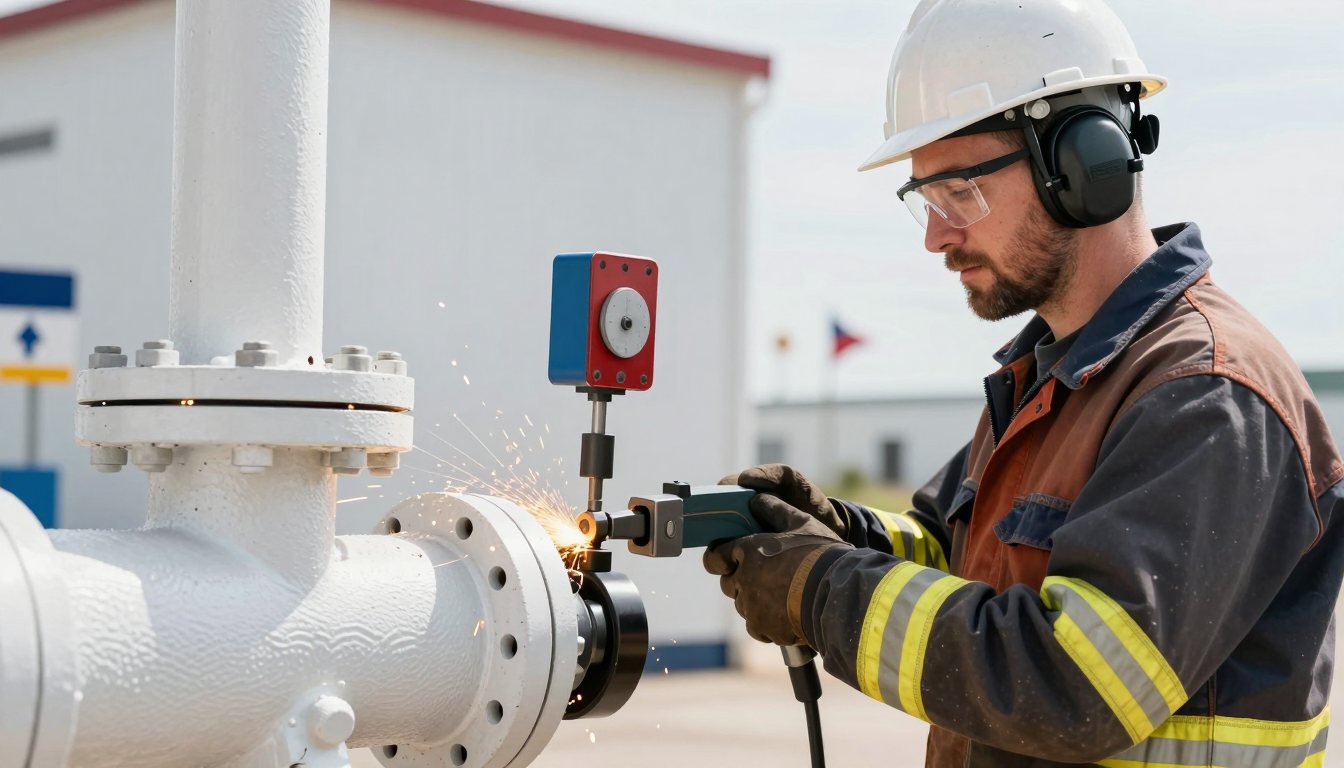

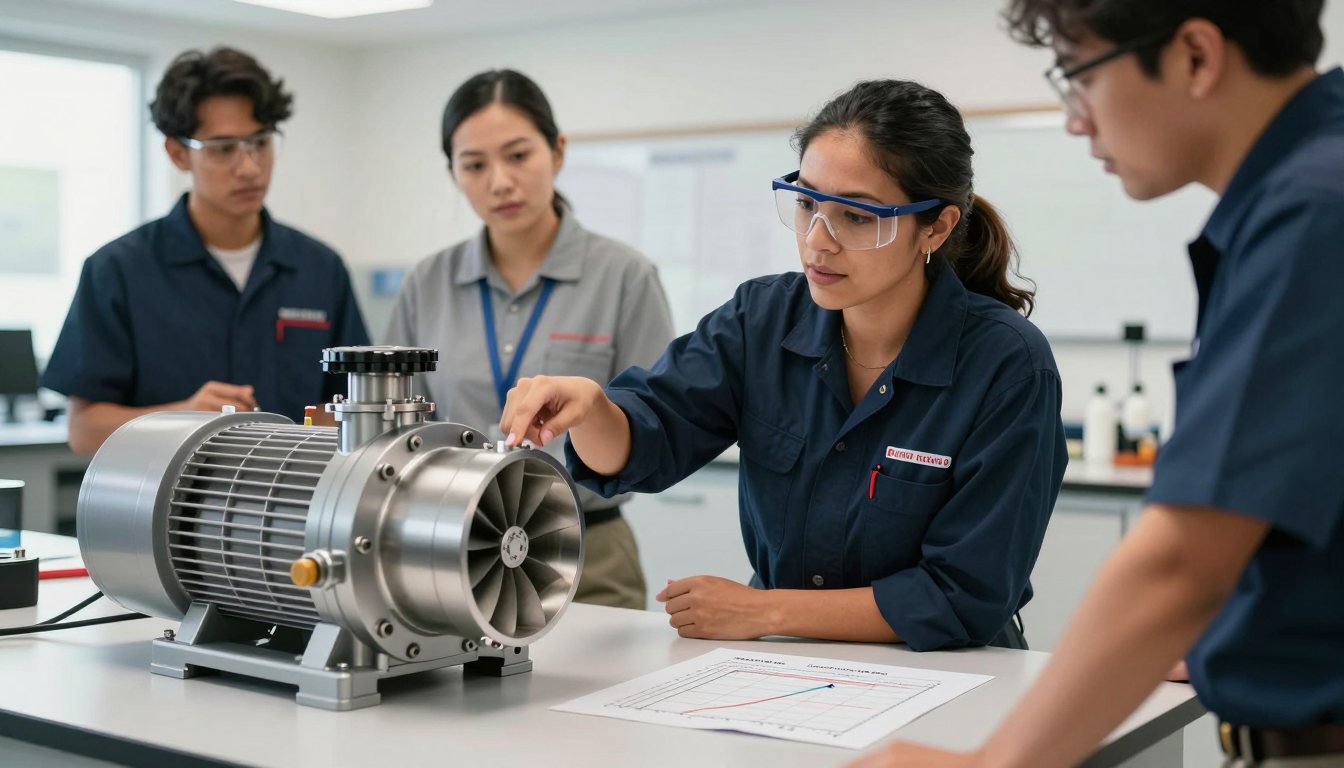
Pumps are the most numerous rotating machines in process, utility, and manufacturing plants, and their reliability has a direct effect on safety, production, and energy cost. This course provides a structured introduction to centrifugal and positive displacement pumps, combining hydraulic fundamentals with practical maintenance knowledge. Participants learn how pumps are classified and selected, how head relates to pressure, how to read performance curves and calculate power requirements, and how to recognize cavitation and other operating problems. The course introduces the API pump standards widely used in the petroleum, petrochemical, and natural gas industries.
Who Should Attend
- Mechanical maintenance technicians and pump fitters
- Process and utility operators
- Junior mechanical and reliability engineers
- Maintenance planners and storekeepers handling pump spares
Learning Outcomes
- Classify pump types and identify their common applications
- Use a pump selection chart to identify a suitable pump type for a duty
- Explain the relationship between head and pressure and interpret pump performance curves
- Calculate hydraulic and brake power requirements for a pumping duty
- Explain NPSH and recognize cavitation and other operating problems
- Describe routine maintenance, alignment, and sealing requirements for centrifugal and positive displacement pumps
Course Outline
- Module 1 — Types of Pumps and Common Applications: centrifugal, rotary, and reciprocating pumps
- Module 2 — Pump Selection: selection charts, duty points, and API pump standards
- Module 3 — Relationship Between Head and Pressure: specific gravity, system curves, and performance curves
- Module 4 — Calculating Pump Power Requirements: hydraulic power, efficiency, and motor sizing
- Module 5 — NPSH and Cavitation: suction conditions, NPSH margin, and recirculation
- Module 6 — Pump Maintenance: bearings, seals, alignment, and condition monitoring
- Module 7 — Energy Assessment: system efficiency and the ISO/ASME 14414 methodology
Standards & References
API Std 610 / ISO 13709 — Centrifugal Pumps for Petroleum, Petrochemical and Natural Gas Industries; API Std 685 — Sealless Centrifugal Pumps; API Std 674 — Positive Displacement Pumps, Reciprocating; API Std 675 — Positive Displacement Pumps, Controlled Volume; API Std 676 — Positive Displacement Pumps, Rotary; API Std 682 — Pumps: Shaft Sealing Systems; ISO/ASME 14414 — Pump System Energy Assessment.
Assessment & Certification
Candidate competence is evaluated through a written examination and practical exercises in pump curve interpretation, power calculation, and pump inspection. Successful candidates receive an IIME Certificate of Training bearing a unique verification code that can be confirmed online. The program comprises 24 contact hours (3 days).
1 certificates issued for this program
- A Ali M.Iraqi