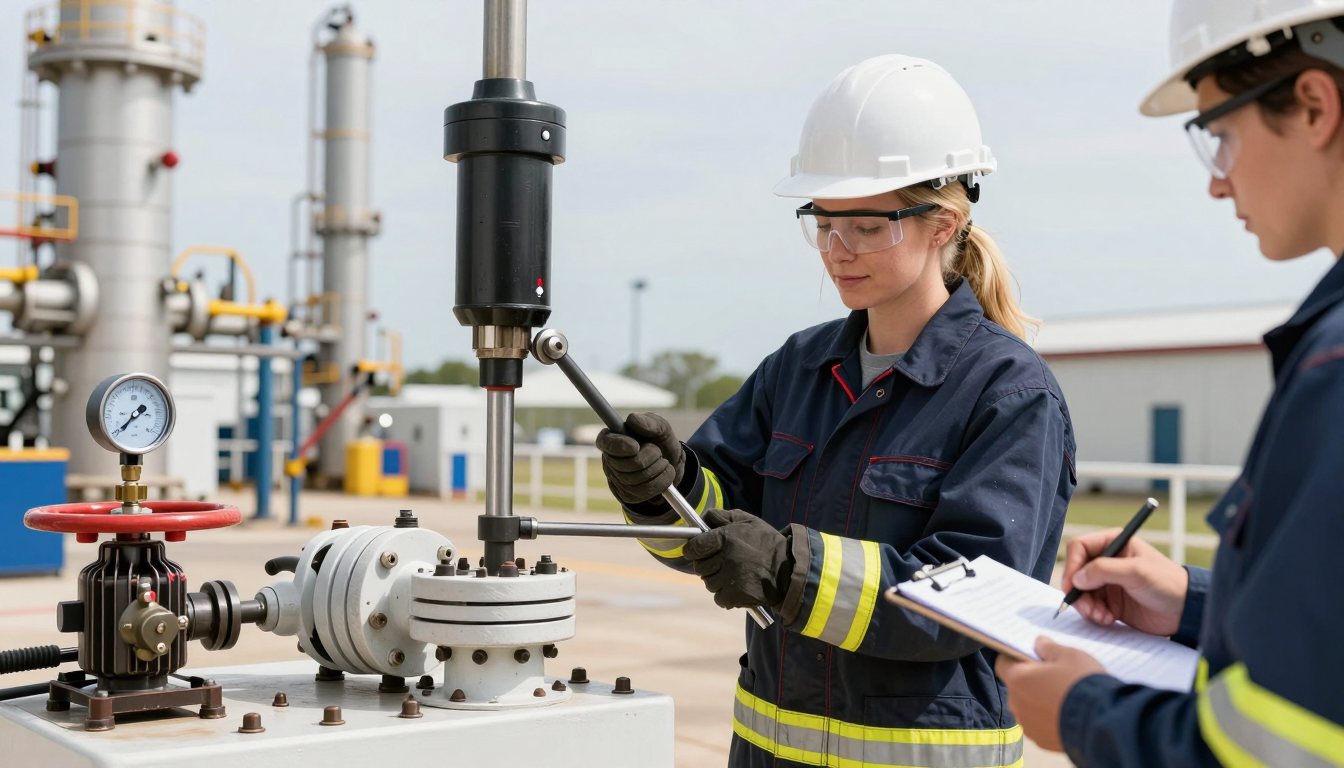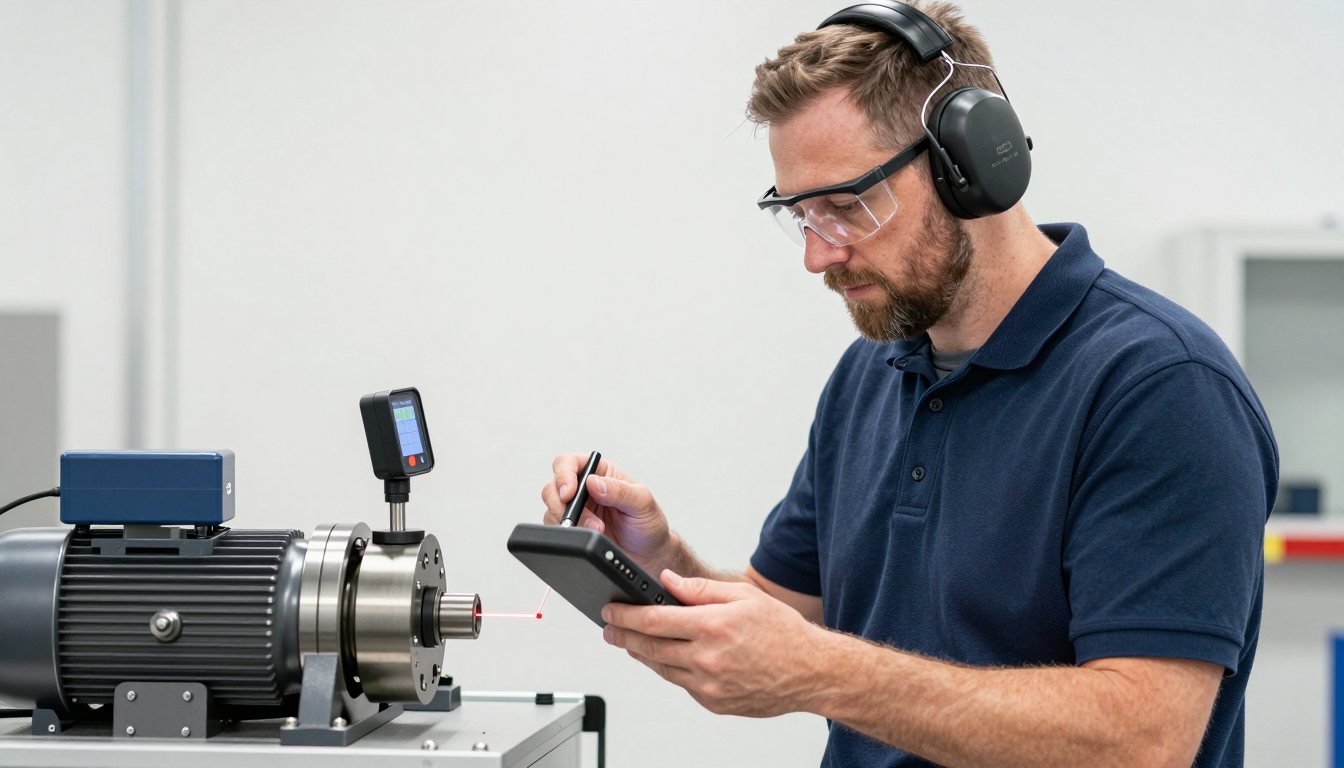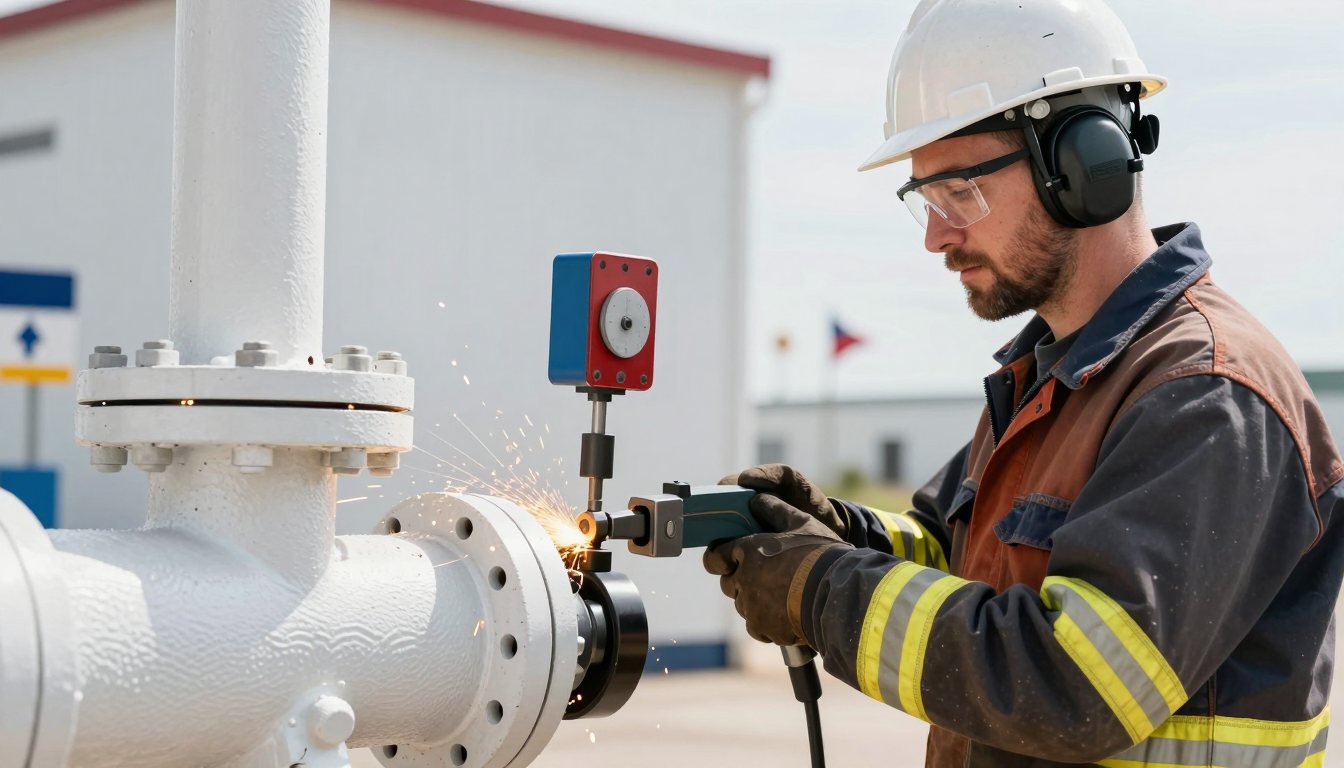

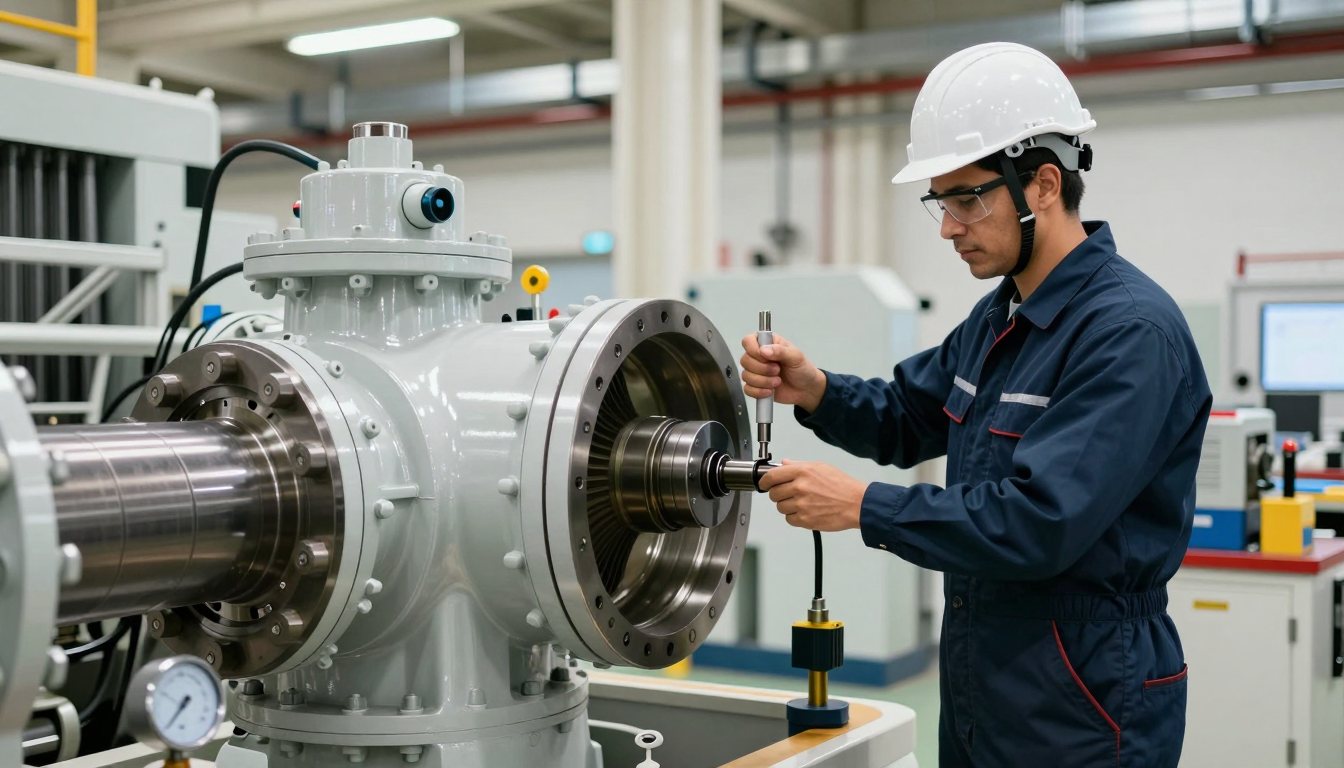
Coupling bolts and other critical bolted joints must achieve accurate and uniform preload to transmit load reliably and to resist loosening and fatigue. This two-day course develops the knowledge and practical skill to prepare, assemble and tighten such joints correctly. Participants review gasket and bolt types and their limitations, learn to identify the correct joint components, and compare manual torque tightening with hydraulic bolt tensioning. Practical sessions cover tensioner setup, pressure calculation, load transfer and verification, with constant attention to the safe handling of high-pressure hydraulic equipment.
Who Should Attend
- Mechanical and rotating equipment technicians
- Bolting technicians and fitters
- Maintenance supervisors and planners for critical machinery
- Inspectors verifying bolted joint integrity
Learning Outcomes
- Identify gasket and bolt types and describe their service limitations
- Select and verify the correct joint components for a given application
- Perform manual torque tightening using appropriate tools and sequences
- Set up hydraulic bolt tensioners and calculate applied pressure to achieve target residual load
- Explain load-transfer losses and how they are compensated
- Apply safe working practices for high-pressure hydraulic tensioning equipment
Course Outline
- Module 1 — Bolted Joint Fundamentals: preload, joint stiffness, load transfer and failure modes.
- Module 2 — Gasket Types and Their Limitations: sheet, spiral-wound, ring-type and metallic gaskets.
- Module 3 — Bolt Types and Their Limitations: materials, grades, thread forms and dimensional standards.
- Module 4 — Identification of Correct Joint Components: verification, inspection and preparation of parts.
- Module 5 — Manual Torque Tightening: tools, lubrication, patterns and record keeping.
- Module 6 — Hydraulic Bolt Tensioning: tensioner selection, pressure calculation, multi-tool operation and verification.
- Module 7 — Safety and Documentation: hydraulic hazards, exclusion zones and joint completion records.
Standards & References
Course content draws on ASME Boiler and Pressure Vessel Code, Section VIII (Pressure Vessels) and Section III (Nuclear Facility Components), for bolting design and preload principles; and ASME B18.2.1 (Square, Hex, Heavy Hex and Askew Head Bolts and Hex, Heavy Hex, Hex Flange, Lobed Head and Lag Screws). Participants are introduced to the scope and application of each document; the current edition should always be consulted for project work.
Assessment & Certification
The program comprises 16 contact hours (2 days) of instruction. Assessment consists of a written examination and a practical assessment in which candidates assemble a training joint and tighten it using both torque and hydraulic tensioning methods. Successful candidates receive an IIME Certificate of Training bearing a unique verification code, which can be verified online.
11 certificates issued for this program
- S SIRVAN G.Iraqi
- R RIMON O.Iraqi
- I IBRAHIM H.Iraqi
- A AHOURA A.Iraqi
- M MUSAAB K.Iraqi
- M MOHAMMED S.Iraqi
- M MOHAMED S.Iraqi
- K KRISHMAMANI L.Iraqi