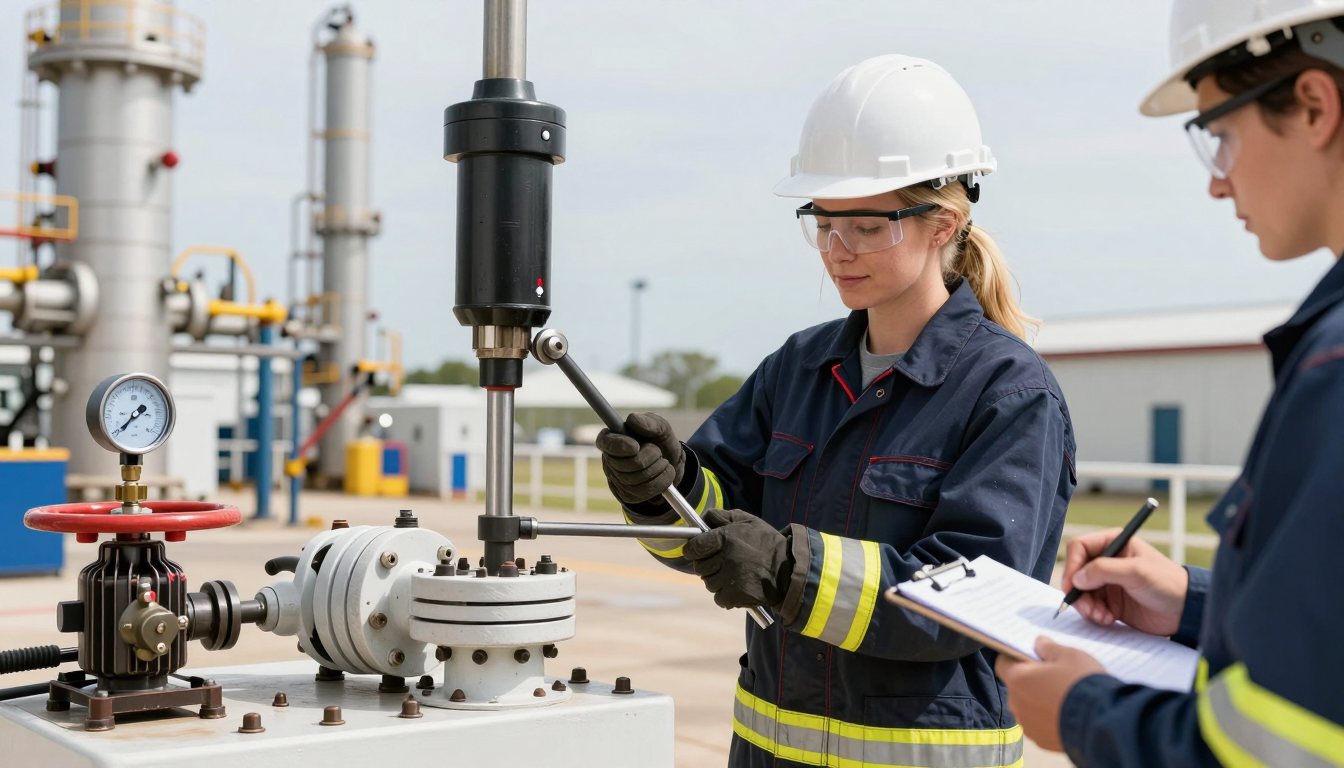

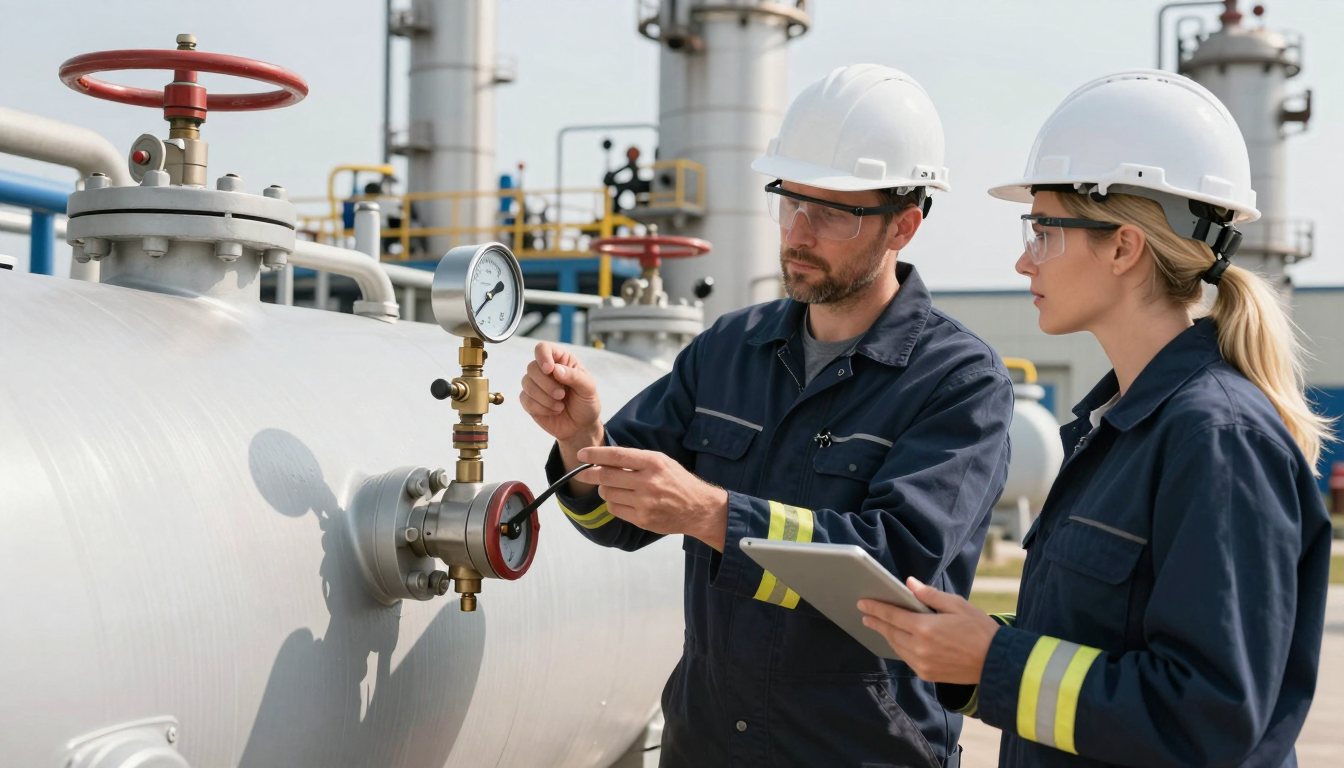
Pressure vessels store large amounts of energy, and their safe service depends on disciplined operation, routine monitoring and planned maintenance. This five-day course provides operations and maintenance personnel with a practical understanding of how vessels are designed, how they degrade and how they must be operated and maintained to remain within their safe operating envelope. Participants study operating limits and overpressure protection, routine surveillance and integrity operating windows, preventive maintenance activities, and the interface with in-service inspection, repair and fitness-for-service programs under recognized American codes.
Who Should Attend
- Process operators and control room personnel
- Maintenance technicians and supervisors
- Mechanical and reliability engineers new to pressure equipment
- HSE and process safety personnel
Learning Outcomes
- Describe pressure vessel components, design basis and nameplate data
- Operate vessels within design limits and integrity operating windows
- Explain the function, testing and maintenance of pressure-relief devices
- Conduct routine monitoring and surveillance and report anomalies
- Plan preventive maintenance activities and prepare vessels for entry
- Explain the roles of API 510 inspection, ASME PCC-2 repair and API 579-1/ASME FFS-1 assessment
Course Outline
- Module 1 — Pressure Vessel Operational Basics: types, components, design data and nameplates.
- Module 2 — Safe Operating Practices: start-up, shutdown, operating limits and overpressure protection.
- Module 3 — Routine Monitoring and Surveillance: integrity operating windows, external checks and records.
- Module 4 — Damage Mechanisms Awareness: corrosion, erosion, fatigue and cracking in service.
- Module 5 — Preventive Maintenance Activities: relief valves, gaskets, nozzles, internals and insulation.
- Module 6 — Inspection Interfaces: API 510 and API RP 572 inspection planning and findings.
- Module 7 — Vessel Entry and Isolation: preparation for internal inspection, blinding, cleaning and confined space precautions.
- Module 8 — Repair and Fitness-for-Service: ASME PCC-2 repair methods and API 579-1/ASME FFS-1 principles.
Standards & References
Course content draws on API 510 (Pressure Vessel Inspection Code); API RP 572 (Inspection Practices for Pressure Vessels); API 579-1/ASME FFS-1 (Fitness-For-Service); and ASME PCC-2 (Repair of Pressure Equipment and Piping). Participants are introduced to the scope and application of each document; the current edition should always be consulted for project work.
Assessment & Certification
The program comprises 40 contact hours (5 days) of instruction. Assessment consists of a written examination and a practical exercise in which candidates complete a surveillance checklist and a preventive maintenance plan for a sample vessel. Successful candidates receive an IIME Certificate of Training bearing a unique verification code, which can be verified online.
106 certificates issued for this program
- L Liu J.Iraqi
- Z Zhang K.Iraqi
- Z Zhao H.Iraqi
- L Liu H.Iraqi
- M Mei W.Iraqi
- J Ji C.Iraqi
- Z Zhang X.Iraqi
- W Wang B.Iraqi