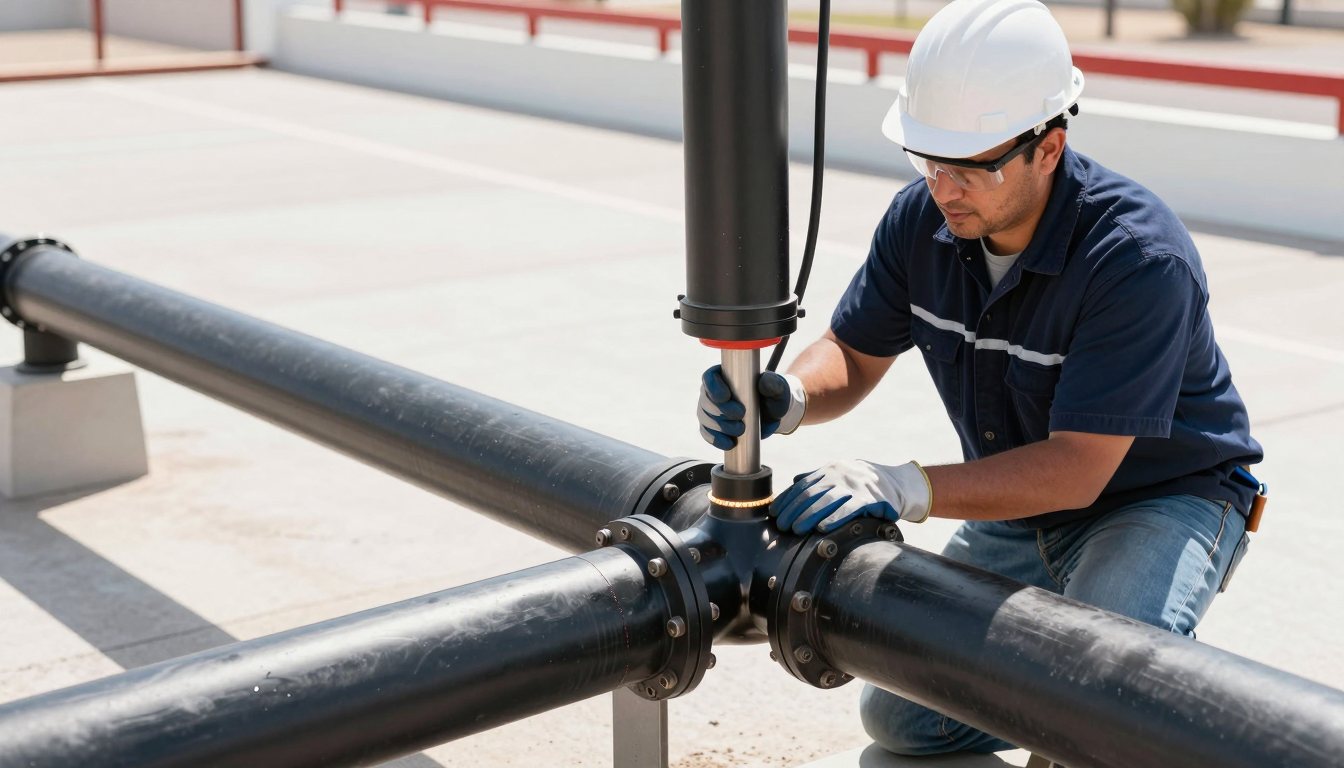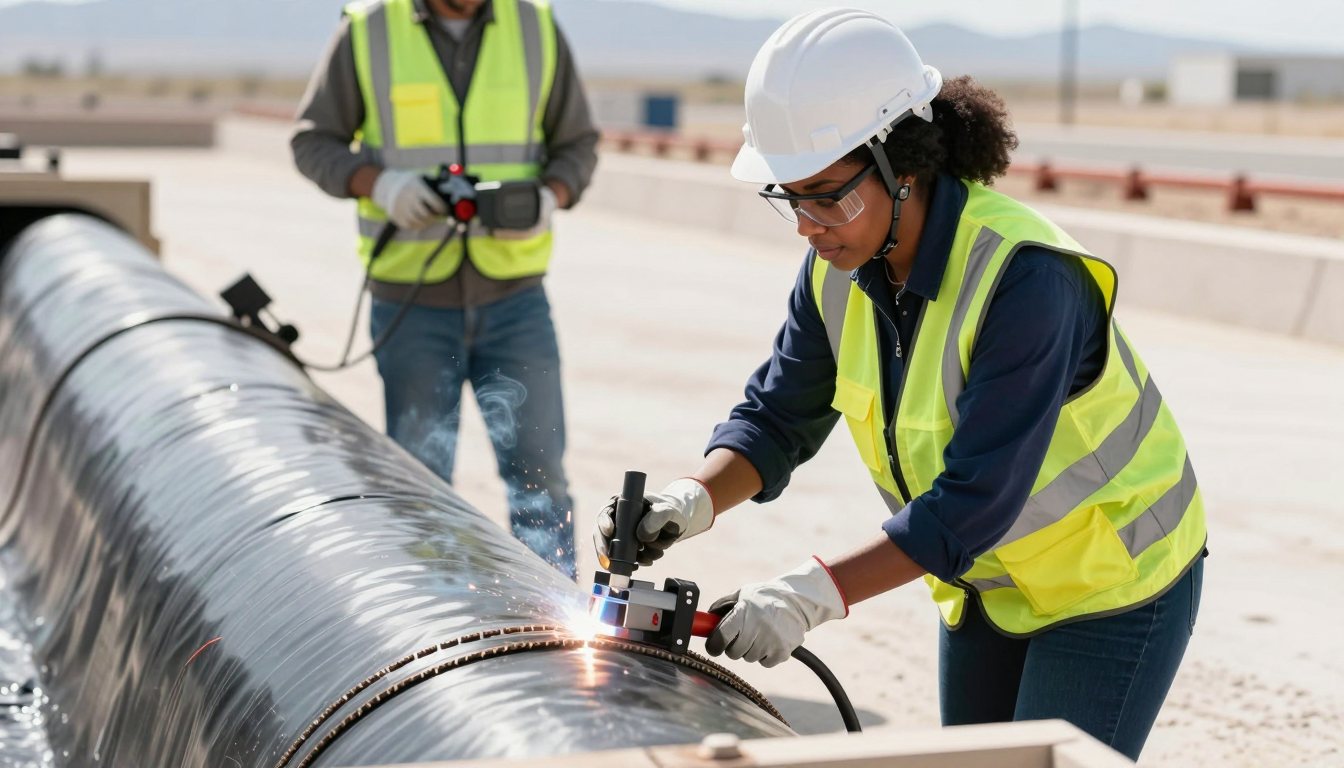

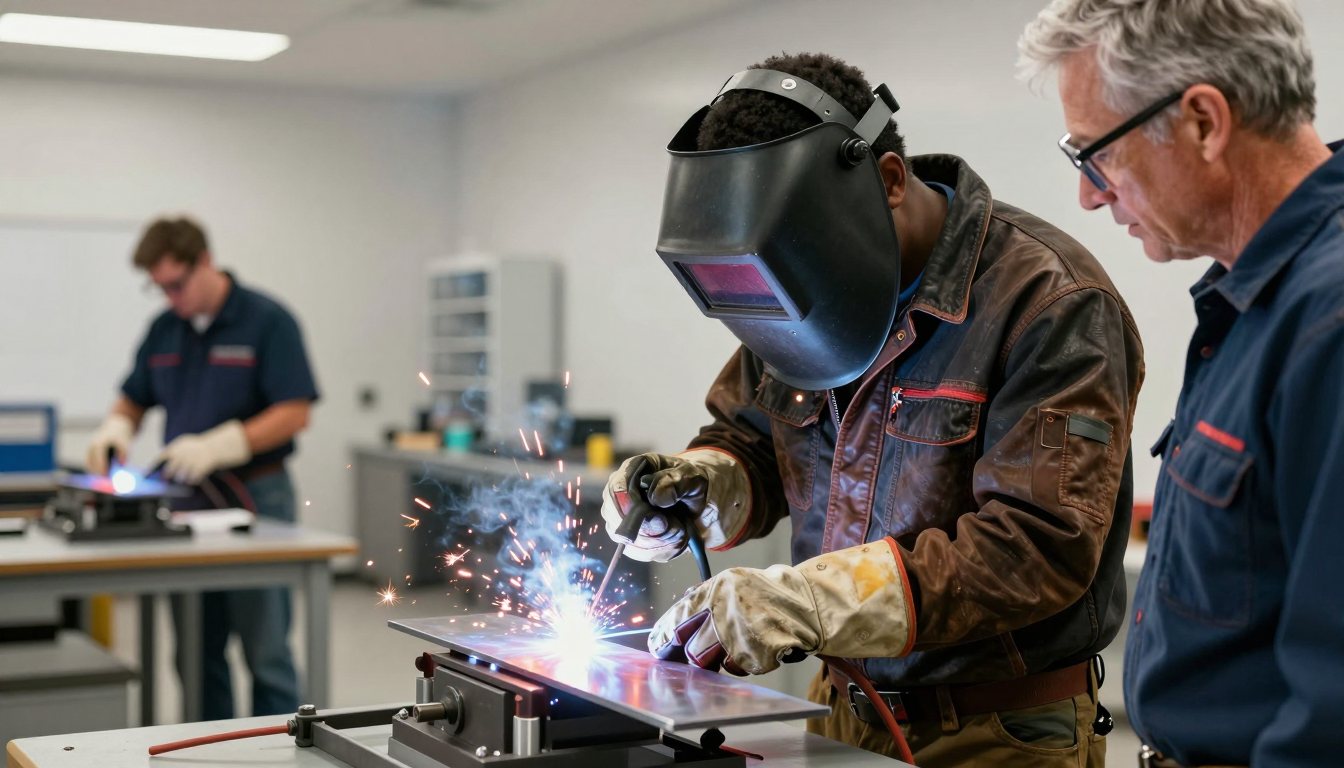
The 3G vertical groove weld is one of the most demanding and widely specified welder performance qualification tests. This ten-day, predominantly hands-on program prepares welders to pass shielded metal arc welding qualification on vertical-up groove welds in plate. Participants review welding safety, electrode classification and handling, and joint preparation, then build skill progressively through stringer and weave practice, root passes with and without backing, fill and cap passes, and full test plates. Each test plate is evaluated by visual examination and bend testing, giving participants direct feedback against code acceptance criteria.
Who Should Attend
- Welders preparing for performance qualification in the vertical position
- Apprentice and intermediate welders seeking to extend position capability
- Maintenance and fabrication welders requiring requalification
- Welding instructors refreshing qualification test technique
Learning Outcomes
- Apply SMAW safety practices and correct electrode storage and handling
- Set amperage and polarity for low-hydrogen and cellulosic electrodes
- Prepare and fit up groove weld test plates to specified dimensions
- Deposit sound root, fill and cap passes in the vertical-up position
- Identify and prevent common discontinuities such as slag inclusions, porosity and lack of fusion
- Explain test requirements and qualified position ranges under the applicable codes
- Produce a test plate that meets visual and bend test acceptance criteria
Course Outline
- Module 1 — Welding Safety and SMAW Fundamentals: PPE, fumes, electrical safety and process principles.
- Module 2 — Electrodes and Equipment: AWS classifications, low-hydrogen storage, amperage and polarity.
- Module 3 — Joint Preparation and Fit-Up: bevel angle, root opening, backing and tack welding.
- Module 4 — Vertical-Up Technique Development: stringer and weave beads and puddle control.
- Module 5 — Root, Fill and Cap Passes: sequencing, interpass cleaning and profile control.
- Module 6 — Discontinuities and Corrective Technique: causes and prevention of common defects.
- Module 7 — Qualification Test Requirements: AWS D1.1, ASME Section IX and ISO 9606-1 test and position ranges.
- Module 8 — Test Plates and Evaluation: full test plates, visual examination and bend testing.
Standards & References
Course content draws on AWS D1.1/D1.1M (Structural Welding Code — Steel); ASME Boiler and Pressure Vessel Code, Section IX (Welding, Brazing and Fusing Qualifications); and ISO 9606-1 (Qualification Testing of Welders — Fusion Welding — Steels). Participants are introduced to the scope and application of each document; the current edition should always be consulted for project work.
Assessment & Certification
The program comprises 80 contact hours (10 days) of instruction. Assessment consists of a written examination and a practical qualification-style test in which each candidate welds a 3G groove test plate that is visually examined and bend tested. Formal welder performance qualification remains the responsibility of the employer or manufacturer under the applicable code. Successful candidates receive an IIME Certificate of Training bearing a unique verification code, which can be verified online.
2 certificates issued for this program
- A ABDULLAH M.Iraqi
- A ABEDALI A.Iraqi