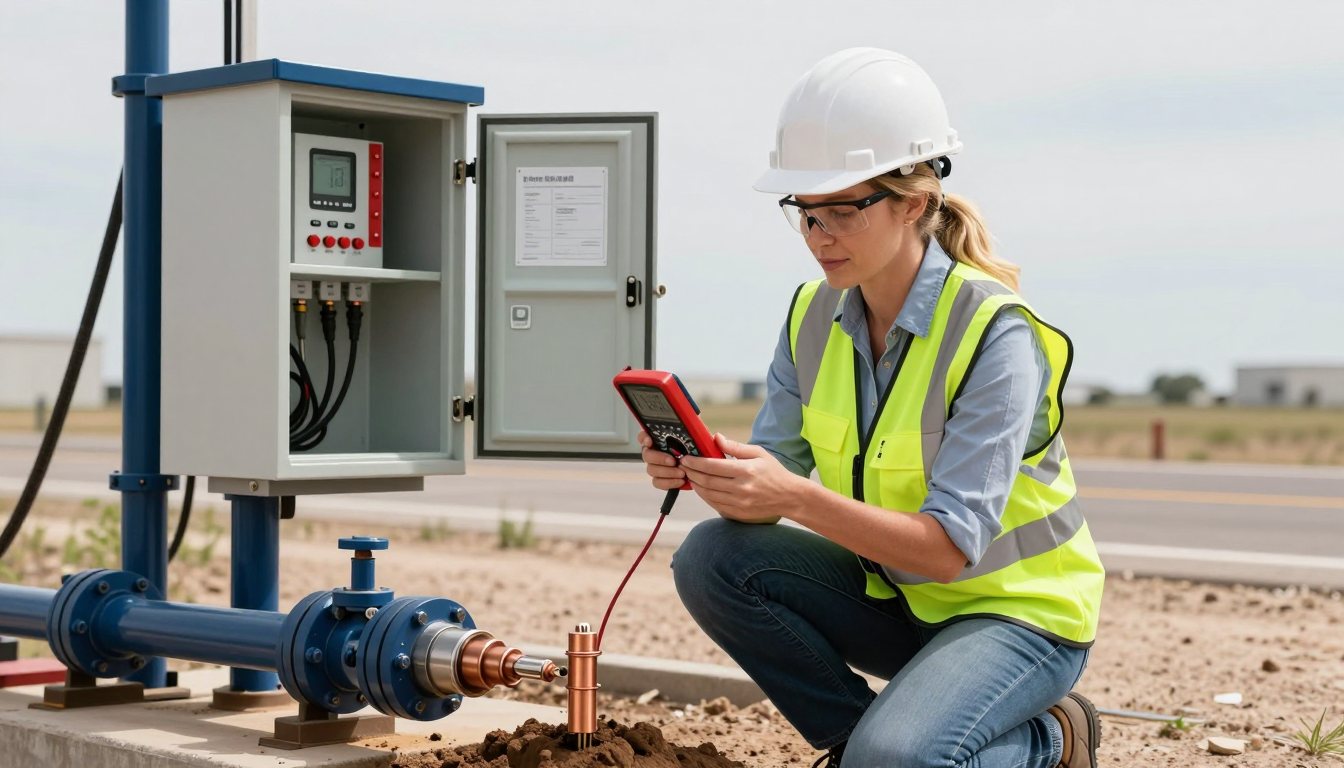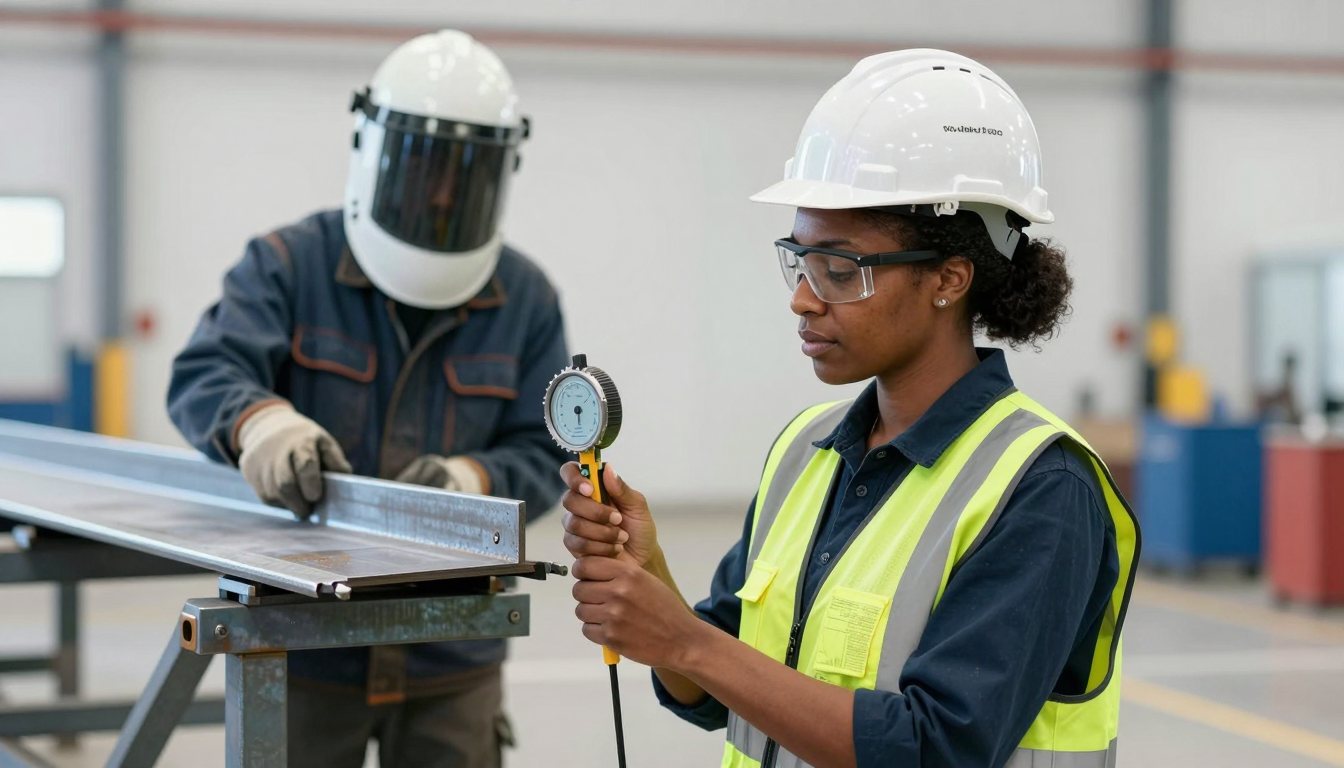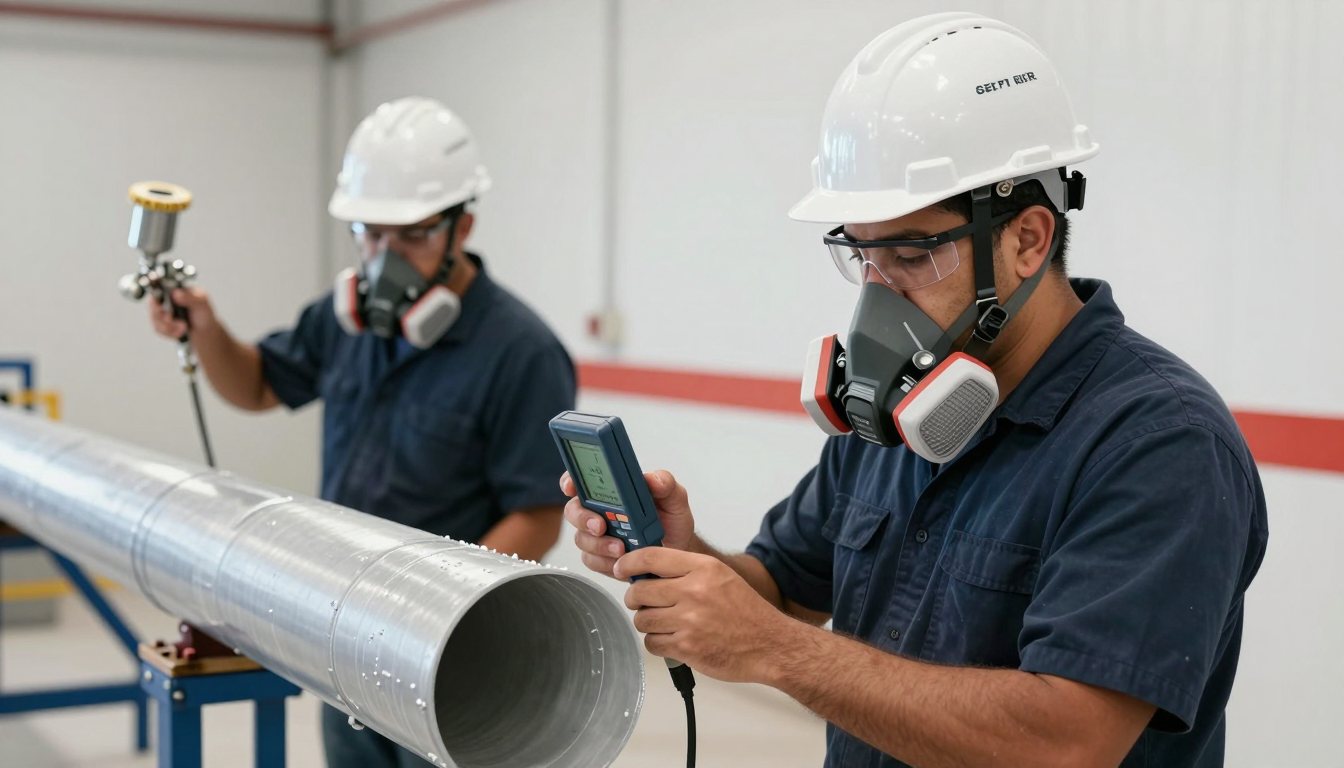

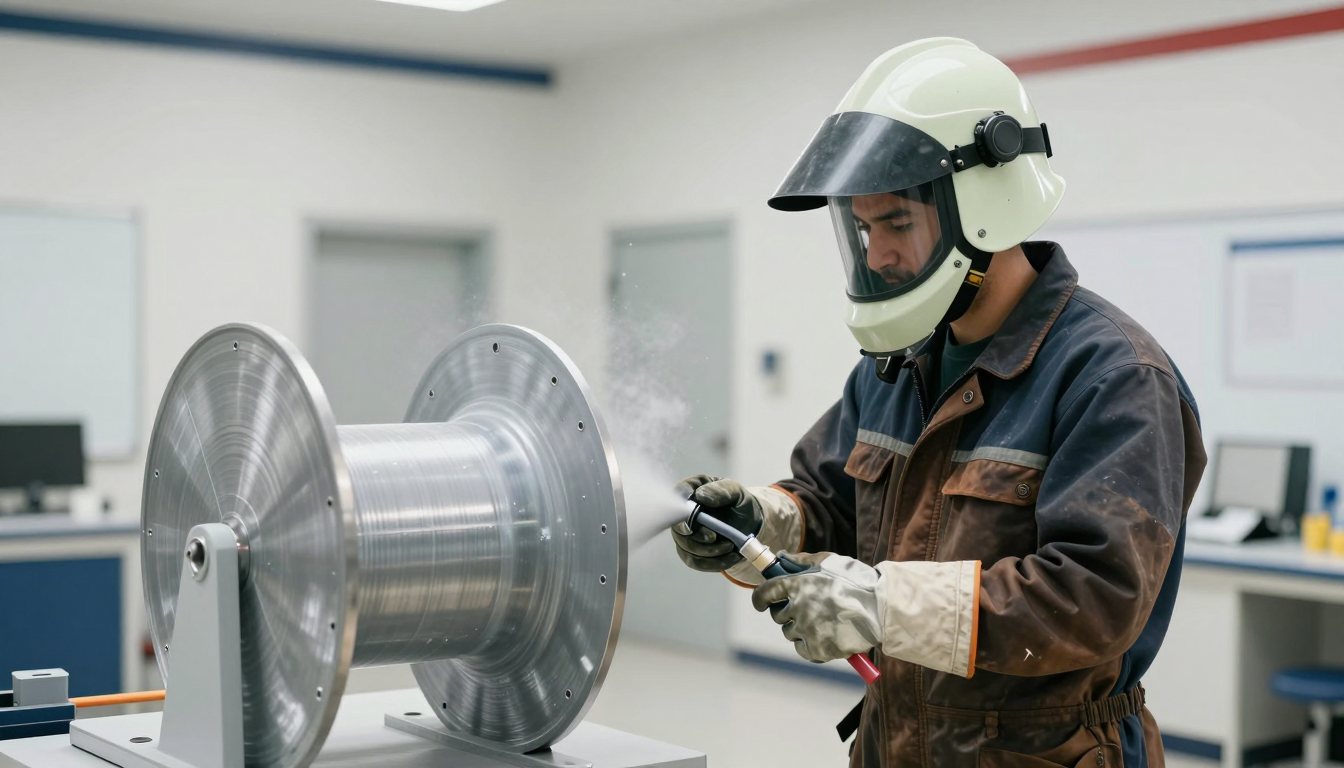
The durability of any protective coating system depends on the quality of the surface beneath it. This course trains blast operators and surface preparation technicians to set up and operate abrasive blast-cleaning equipment, select appropriate abrasives, and produce steel surfaces that meet specified cleanliness and profile requirements. Through guided hands-on practice, participants learn correct nozzle technique, recognize common defects, and apply the controls necessary to protect themselves and others in the blasting environment. The course provides the technical foundation required for progression to supervisory responsibility.
Who Should Attend
- Abrasive blast operators and trainee blasters
- Painters and coating applicators performing their own surface preparation
- Maintenance technicians in refineries, shipyards, and fabrication shops
- Helpers and pot tenders supporting blasting crews
Learning Outcomes
- Describe the purpose of surface preparation and its effect on coating performance
- Assemble, inspect, and start up a pressure-pot blast-cleaning system safely
- Apply correct nozzle distance, angle, and traverse speed to achieve uniform cleanliness
- Identify ISO 8501-1 rust grades A to D and preparation grades Sa 1 to Sa 3
- Measure surface profile and record ambient conditions before coating
- Use respiratory protection, PPE, and deadman controls correctly
Course Outline
- Module 1 — Principles of Surface Preparation: rust, mill scale, contaminants, and why profile matters
- Module 2 — Blast-Cleaning Equipment: compressors, blast pots, metering valves, hoses, couplings, and nozzles
- Module 3 — Wet and Dry Abrasive Blast Cleaning: methods, advantages, limitations, and flash-rust control
- Module 4 — Equipment Set-Up and Technique: pre-use checks, pressure at the nozzle, and operating technique
- Module 5 — Abrasives and Surface Grades: abrasive types per ISO 11124-1 and visual grading per ISO 8501-1
- Module 6 — Health, Safety, and Housekeeping: dust, noise, static discharge, air-fed helmets, and waste handling
Standards & References
BS EN ISO 8501-1:2007 — visual assessment of surface cleanliness of steel substrates; BS 7079 Part A1 — British adoption of the ISO 8501-1 grades; ISO 11124-1:2018 — metallic blast-cleaning abrasives, general introduction and classification. OSHA 29 CFR 1910.94 and 1910.134 are referenced for ventilation and respiratory protection.
Assessment & Certification
Candidate competence is evaluated through a written examination and a practical assessment in which each candidate blast-cleans a steel test panel to a specified preparation grade. Successful candidates receive an IIME Certificate of Training bearing a unique verification code that can be confirmed online. The program comprises 24 contact hours (3 days).
13 certificates issued for this program
- A Ajay R.Iraqi
- A Akash R.Iraqi
- M Mohammad A.Iraqi
- R Rajmendra Y.Iraqi
- M Mohammed L.Iraqi
- S Sanjay Y.Iraqi
- U UDAI A.Iraqi
- A ALI J.Iraqi