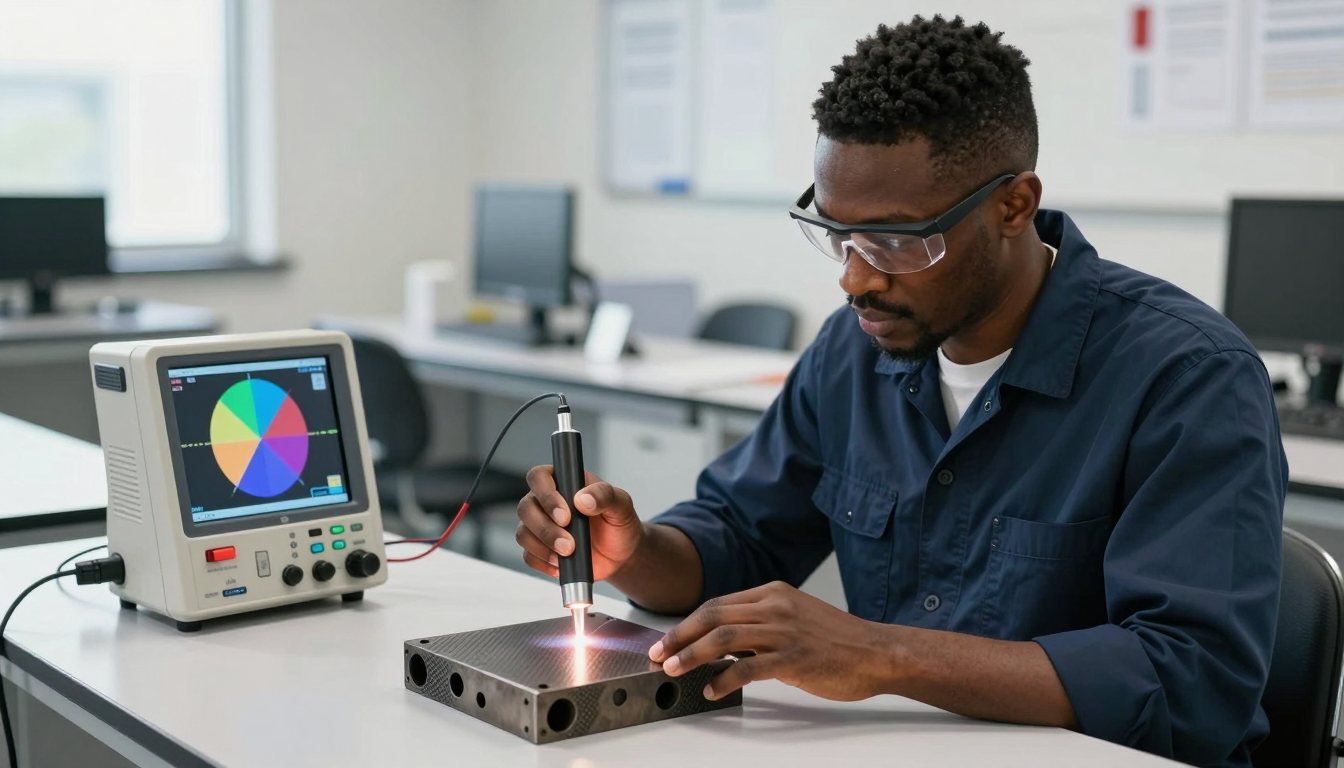

Corrosion under insulation is one of the most significant integrity threats to process piping and vessels, and removing insulation for inspection is costly and slow. Pulsed eddy current testing offers a screening and wall-thickness assessment method that works through insulation, cladding, coatings, and fireproofing without surface preparation. This course develops a thorough understanding of electromagnetic principles, PECT equipment, calibration, and data interpretation, and of the capabilities and limitations of the technique. Participants learn to plan inspections, collect reliable data, evaluate average wall loss, and report results that support integrity decisions.
Who Should Attend
- NDT technicians seeking to add electromagnetic methods
- Asset integrity and corrosion engineers managing CUI programs
- Inspection supervisors and QA/QC personnel
- Reliability engineers in refining, petrochemical, and power generation
Learning Outcomes
- Describe the forms and triggers of corrosion under insulation
- Explain the principles of magnetism, electromagnetism, and pulsed eddy current response
- Set up and calibrate PECT equipment and probes for a given configuration
- Plan inspection grids and collect valid data through insulation and cladding
- Detect and evaluate wall loss and recognize the effects of footprint, lift-off, and edge effects
- Report results with appropriate statements of capability and limitation
Course Outline
- Module 1 — Corrosion Under Insulation: mechanisms, susceptible temperature ranges, and CUI triggers
- Module 2 — Principles of Magnetism and Electromagnetism: induction, permeability, and conductivity
- Module 3 — Pulsed Eddy Current Theory: transient response, decay analysis, and probe footprint
- Module 4 — PECT Equipment and Calibration: instruments, probes, reference measurements, and verification
- Module 5 — Inspection Planning and Data Acquisition: grids, scanning, and influencing factors
- Module 6 — Wall Loss Detection and Evaluation: averaging effects, sizing limitations, and follow-up methods
- Module 7 — Reporting and Personnel Qualification: inspection reports and qualification frameworks
Standards & References
ISO 20669:2017 — Non-destructive testing: pulsed eddy current testing of ferromagnetic metallic components; ISO 15548-1:2013 — Non-destructive testing: equipment for eddy current examination, instrument characteristics and verification; the eddy current standards developed by ISO/TC 135/SC 4. Personnel qualification references include ASNT SNT-TC-1A and ANSI/ASNT CP-189.
Assessment & Certification
Candidate competence is evaluated through a written examination and a practical assessment in which candidates calibrate equipment and evaluate wall loss on insulated test specimens. Successful candidates receive an IIME Certificate of Training bearing a unique verification code that can be confirmed online. The program comprises 40 contact hours (5 days).
5 certificates issued for this program
- M Mr. K.Iraqi
- M Mr. H.Iraqi
- M Mr. D.Iraqi
- M Mr. A.Iraqi
- M Mr. R.Iraqi