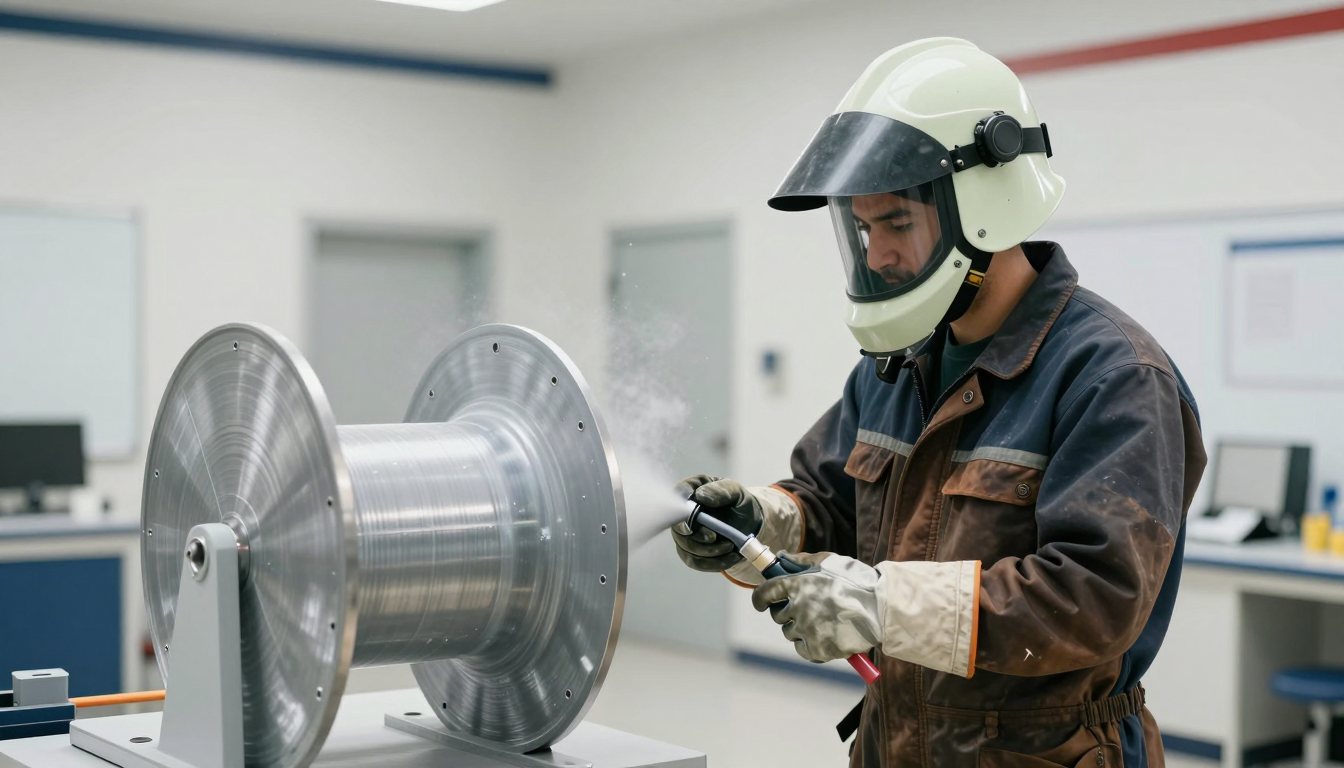


Passive fire protection on structural steel in hydrocarbon processing facilities must perform as designed on the one day it is needed. This two-day course addresses the proper and effective application of Carboline Pyrocrete 241, a high-density Portland cement-based fireproofing material, together with the principles of its inspection. Participants review how fire resistance is rated, examine the material's characteristics and limitations, and learn the preparation, mixing, spraying, troweling and curing practices that determine in-service performance. Inspection topics include thickness and density verification, bond and cohesion testing and documentation. The course is independent of the manufacturer; current Carboline product data sheets and application instructions always govern.
Who Should Attend
- Fireproofing applicators, foremen and crew leaders
- Coating and fireproofing inspectors
- QA/QC personnel in oil, gas and petrochemical construction
- Engineers and owner representatives who specify or accept fireproofing
Learning Outcomes
- Explain the purpose of passive fire protection and how fire-resistance ratings are established
- Describe the composition, properties and limitations of Pyrocrete 241
- Verify surface preparation, primers, lath and environmental conditions before application
- Apply correct mixing, spray and finishing practices to achieve specified thickness
- Measure thickness and density and conduct bond and cohesion tests
- Identify application defects and prepare inspection records
Course Outline
- Module 1 — Introduction to Fireproofing: fire scenarios, passive fire protection and fire-resistance testing.
- Module 2 — Understanding Carboline Pyrocrete 241: composition, physical properties, uses and limitations.
- Module 3 — Preparation for Applying Pyrocrete 241: substrate, primers, reinforcement, lath and anchors.
- Module 4 — Environmental Conditions and Surface Preparation: temperature, humidity, wind and protection during cure.
- Module 5 — Mixing and Application: equipment, water ratio, spraying, troweling and curing.
- Module 6 — Inspection Principles: thickness, density, bond and cohesion testing, defects and repairs.
- Module 7 — Documentation and Maintenance: records, hold points and in-service inspection.
Standards & References
Course content draws on ASTM E119 (Fire Tests of Building Construction and Materials); ASTM E736 (Cohesion/Adhesion of Sprayed Fire-Resistive Materials Applied to Structural Members); ASTM D4541 (Pull-Off Strength of Coatings Using Portable Adhesion Testers); EN 13381-8 (Test Methods for Determining the Contribution to the Fire Resistance of Structural Members); and NFPA 703. Participants are introduced to the scope and application of each document; the current edition should always be consulted for project work.
Assessment & Certification
The program comprises 16 contact hours (2 days) of instruction. Assessment consists of a written examination and a practical assessment covering mixing, application on a test section and thickness and adhesion verification. Successful candidates receive an IIME Certificate of Training bearing a unique verification code, which can be verified online.
4 certificates issued for this program
- A ABBAS H.Iraqi
- H HAIDER S.Iraqi
- H HASAN H.Iraqi
- K KADHIM H.Iraqi