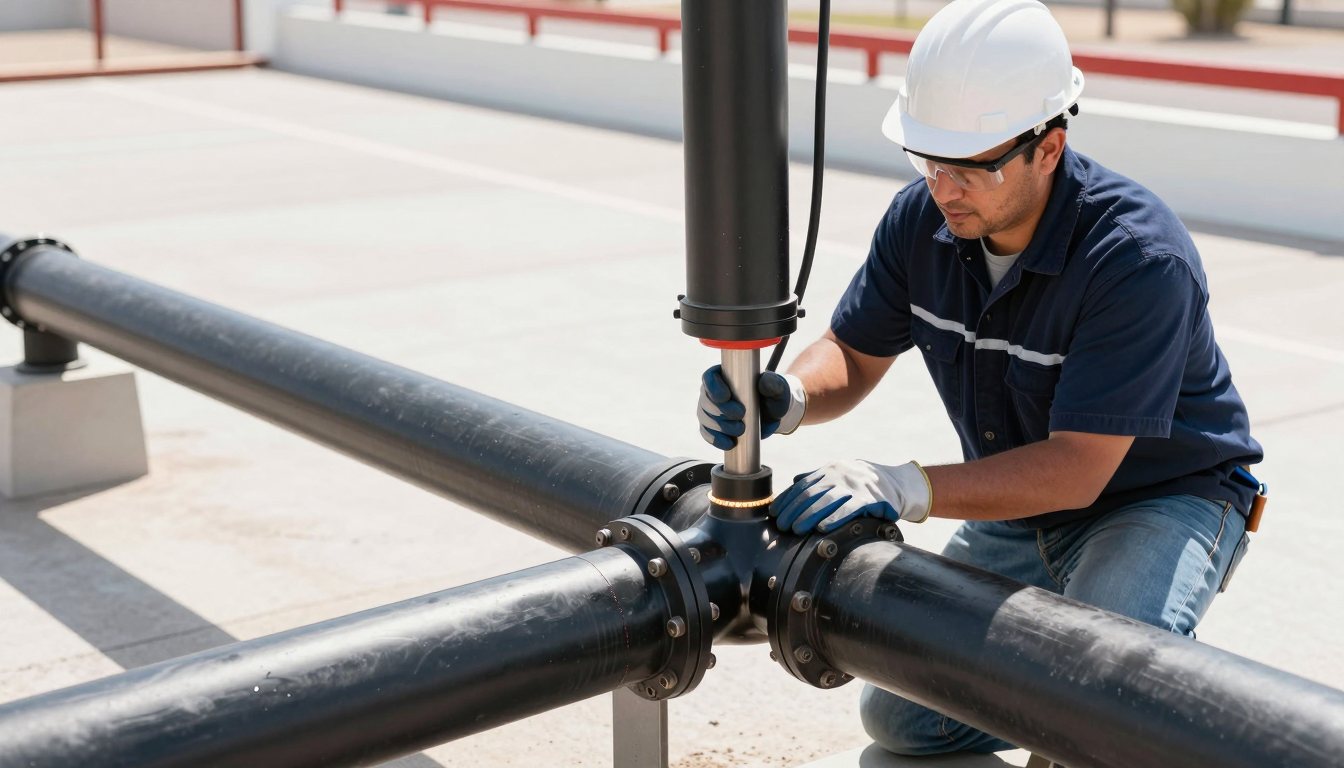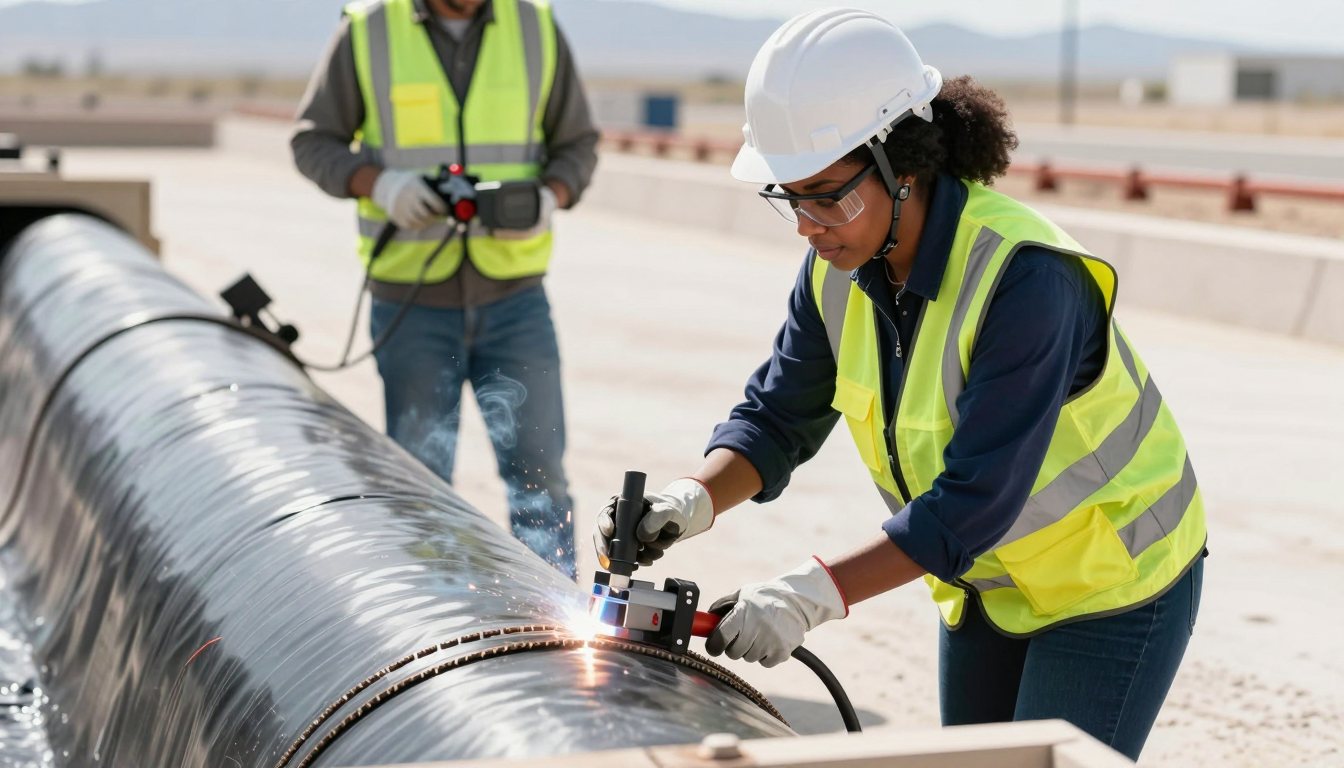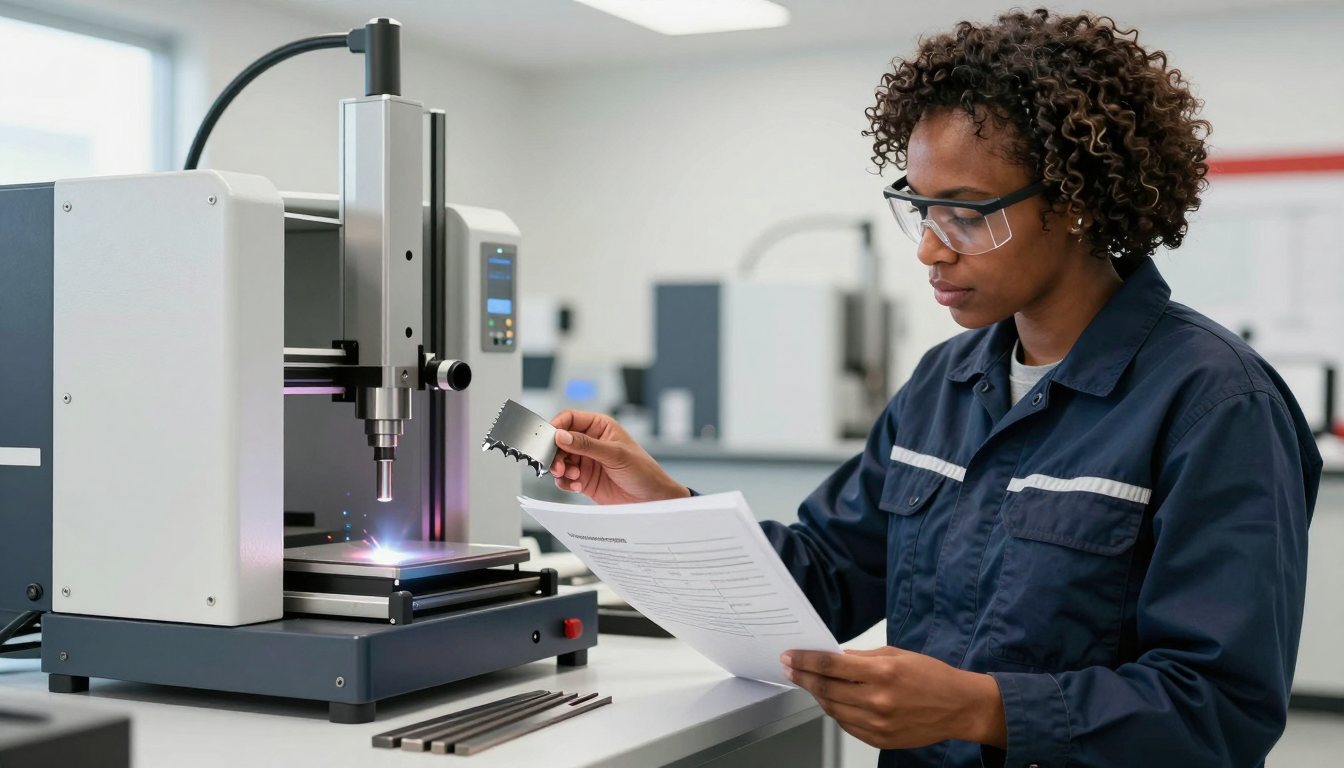

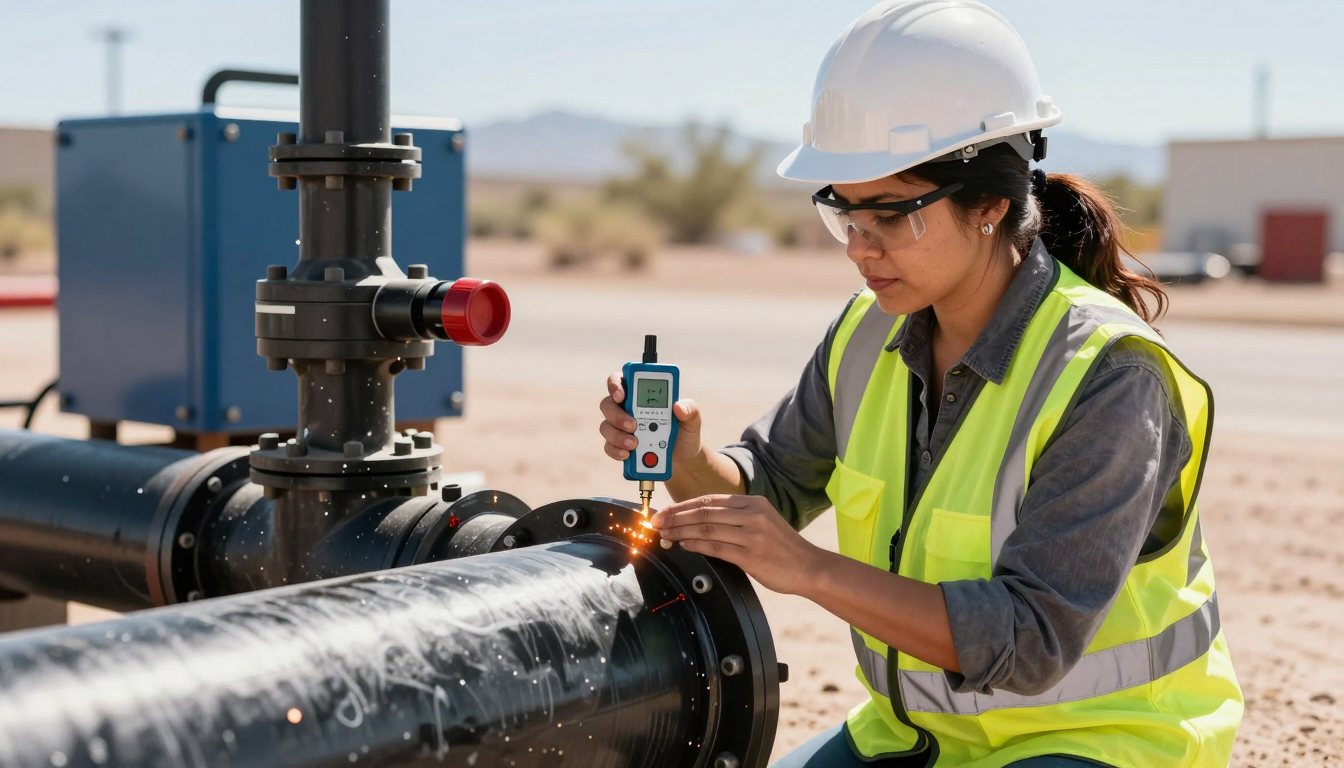
High-density polyethylene is widely used for water, gas, mining, industrial and lining applications, and its long-term performance depends on correctly executed and verified fusion joints. This four-day course equips inspectors to monitor HDPE welding of pipes and sheets with confidence. Participants study HDPE material behavior, the butt fusion, electrofusion and extrusion processes, and the parameters that govern joint quality, then apply visual examination, bead evaluation, data-logger review and destructive test methods. The course emphasizes the inspector's role in procedure compliance, operator verification and complete, traceable records.
Who Should Attend
- Welding and QA/QC inspectors on polyethylene piping and lining projects
- Utility, mining and water-infrastructure quality personnel
- Supervisors and lead operators moving into inspection roles
- Engineers who specify or accept HDPE installations
Learning Outcomes
- Describe the properties of HDPE and their influence on fusion welding
- Explain the parameters of butt fusion, electrofusion and extrusion welding
- Verify welding procedures, machine condition and operator qualification before work begins
- Perform visual and dimensional examination of fusion beads and joints
- Interpret fusion data-logger records and identify nonconforming welds
- Witness and evaluate destructive tests such as bend, tensile and peel tests
- Compile inspection records that meet project and standard requirements
Course Outline
- Module 1 — Introduction to HDPE and HDPE Welding Processes: applications, pipe and sheet products and joining methods.
- Module 2 — HDPE Material Properties: density, melt flow, SDR, thermal behavior and handling.
- Module 3 — Butt Fusion and Electrofusion: heating, changeover, joining pressure, cooling time and fitting preparation.
- Module 4 — Extrusion and Wedge Welding of Sheets: equipment, parameters and seam configurations.
- Module 5 — HDPE Welding Standards and Codes: procedure requirements and acceptance criteria.
- Module 6 — Inspection Equipment and Tools: bead gauges, thermometers, data loggers and test equipment.
- Module 7 — Testing and Documentation: visual, destructive and non-destructive tests, nonconformance and reporting.
Standards & References
Course content draws on AWS D20.20/D20.20M as cited for this program; ASTM F2620 (Heat Fusion Joining of Polyethylene Pipe and Fittings); ASTM F1290 (Electrofusion Joining of Polyolefin Pipe and Fittings); and ISO 21307 (Butt Fusion Jointing Procedures for Polyethylene Pipes and Fittings). Participants are introduced to the scope and application of each document; the current edition should always be consulted for project work.
Assessment & Certification
The program comprises 32 contact hours (4 days) of instruction. Assessment consists of a written examination and a practical assessment in which candidates inspect sample fusion joints, review data-logger records and report acceptance decisions. Successful candidates receive an IIME Certificate of Training bearing a unique verification code, which can be verified online.
1 certificates issued for this program
- Y YAHYA A.Iraqi