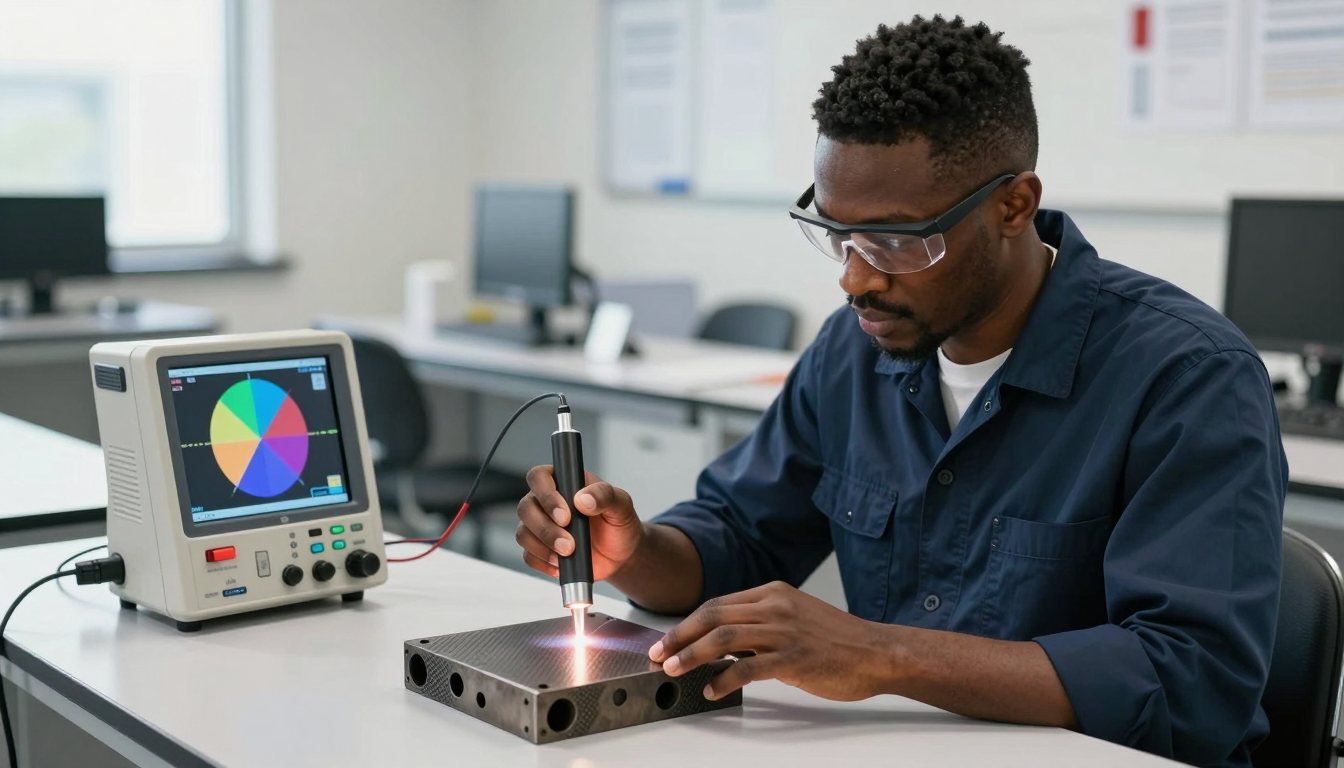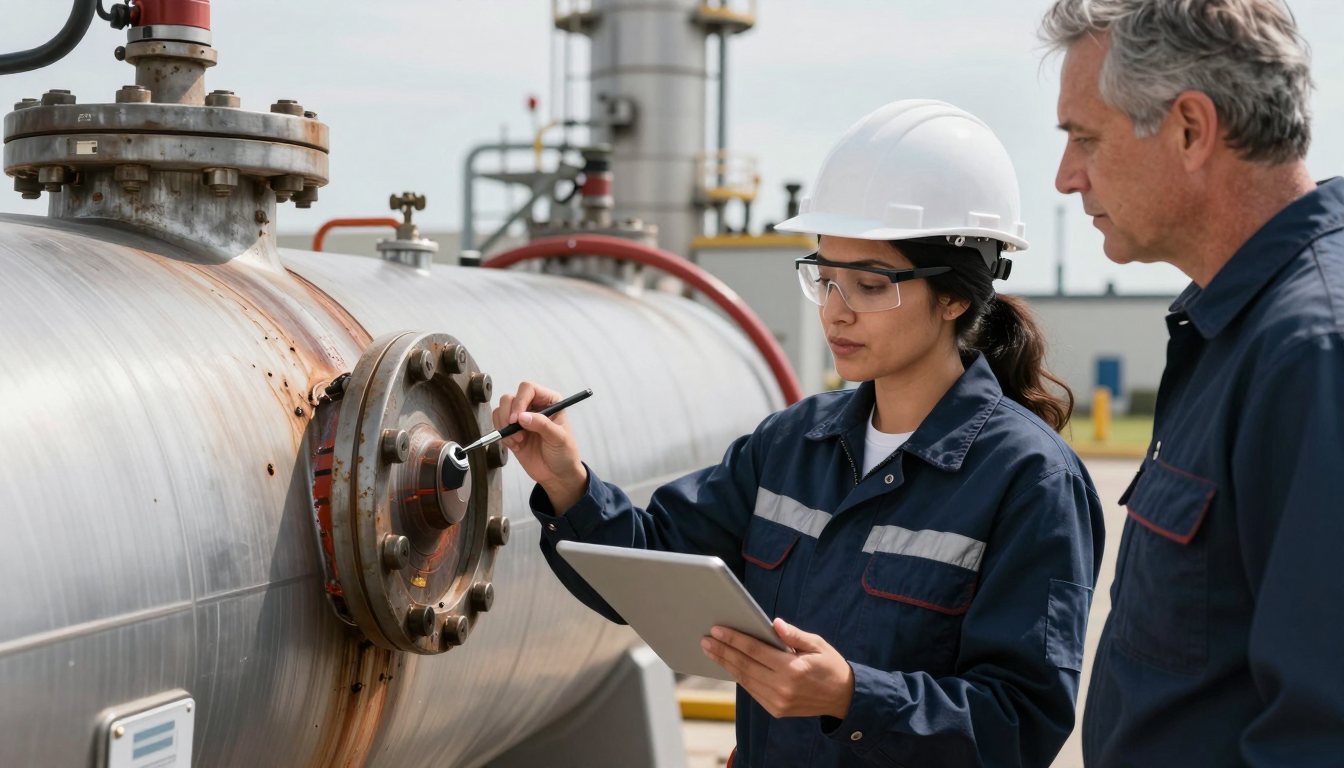

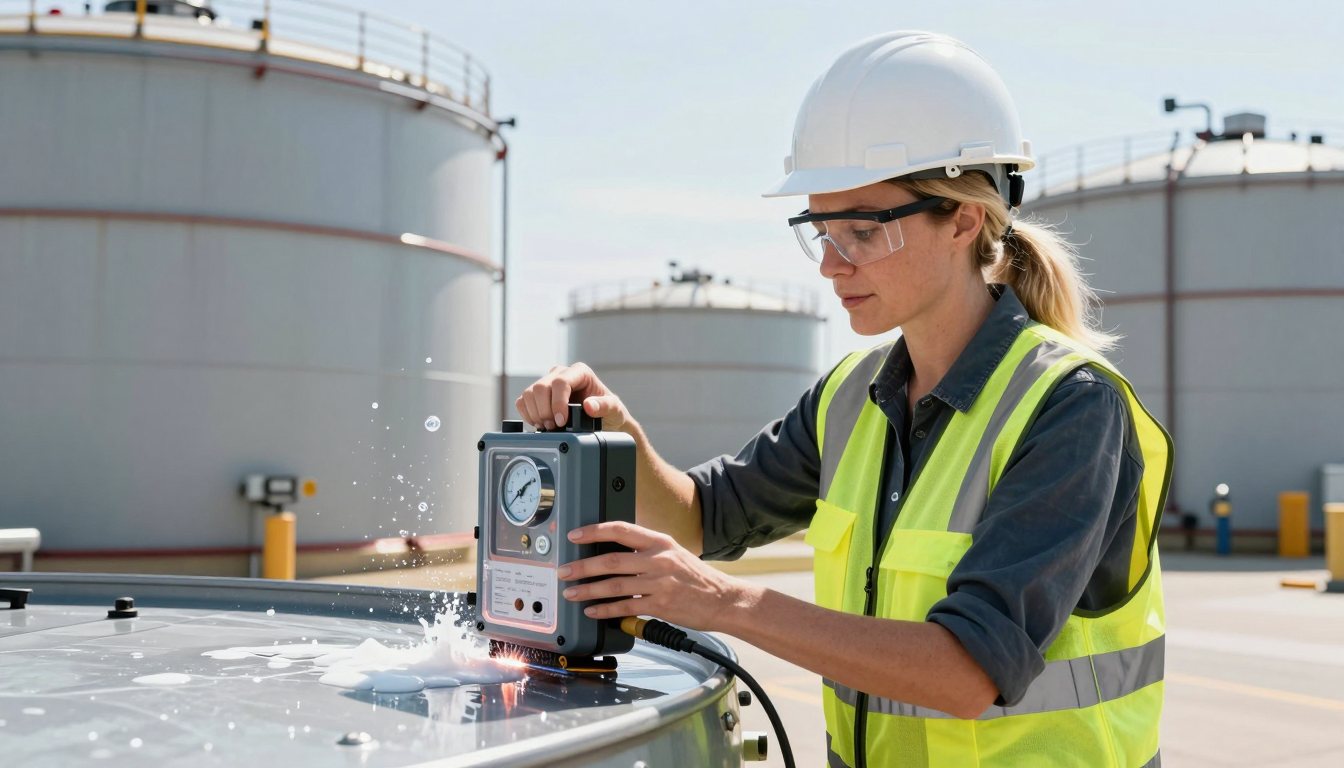
Vacuum box testing is the standard method for detecting through-thickness leaks in welds that cannot be pressurized, most notably aboveground storage tank bottoms and roof seams. This one-day course develops the knowledge and practical skill to perform the bubble leak test using the vacuum box technique in accordance with recognized code requirements. Participants study leak testing terminology and principles, equipment and test solutions, required partial vacuum and dwell time, overlap and lighting conditions, and the recognition and recording of leak indications. Hands-on practice on welded test plates reinforces correct technique and reporting.
Who Should Attend
- NDT and QA/QC technicians
- Storage tank construction and repair inspectors
- Welding inspectors adding leak testing to their scope
- Tank maintenance supervisors
Learning Outcomes
- Explain the principles and terminology of bubble leak testing
- Select and verify vacuum box, gauge and test solution
- Prepare weld surfaces and set test conditions including vacuum level, dwell time and overlap
- Perform the vacuum box test following a written procedure
- Recognize and mark leak indications and distinguish false indications
- Explain the limitations of the vacuum box technique and when alternative leak testing methods are preferred
- Record results in a test report that meets code requirements
Course Outline
- Module 1 — Leak Testing Fundamentals: leak types, terminology and test method selection.
- Module 2 — Code Requirements: ASME Section V Article 10 and API 650 requirements for tank bottoms.
- Module 3 — Equipment and Materials: vacuum boxes, gauges, pumps and bubble-forming solutions.
- Module 4 — Test Procedure: surface preparation, lighting, vacuum, dwell time and overlap.
- Module 5 — Interpretation and Repair: evaluating indications, marking leaks and retesting after repair.
- Module 6 — Documentation: test records and procedure qualification.
Standards & References
Course content draws on ASME Boiler and Pressure Vessel Code, Section V (Nondestructive Examination), Article 10 (Leak Testing), including the bubble test vacuum box technique; API Standard 650 (Welded Tanks for Oil Storage); and ASTM E1316 (Standard Terminology for Nondestructive Examinations). Participants are introduced to the scope and application of each document; the current edition should always be consulted for project work.
Assessment & Certification
The program comprises 8 contact hours (1 day) of instruction. Assessment consists of a written examination and a practical assessment in which candidates perform a vacuum box test on welded plates containing leaks and report the results. Successful candidates receive an IIME Certificate of Training bearing a unique verification code, which can be verified online.
1 certificates issued for this program
- S SAMI Y.Iraqi