

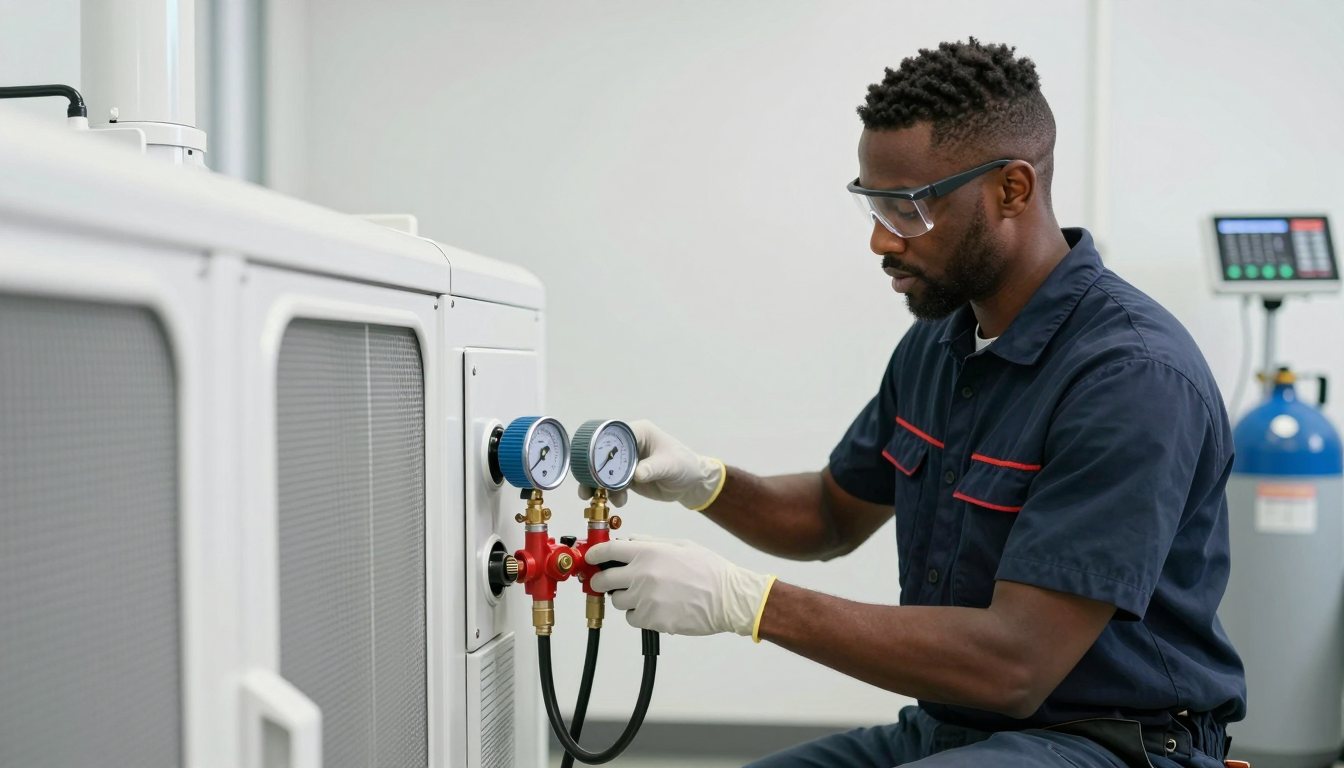
Chlorofluorocarbons were once the dominant refrigerants in cooling and air-conditioning systems, but their role in stratospheric ozone depletion led to their phase-out under the Montreal Protocol. Legacy equipment and stocks remain in service, and technicians must handle them in a manner that prevents release and complies with environmental law. This course explains the chemistry, properties, and environmental effects of CFCs and their replacements, and develops sound practice in recovery, recycling, leak detection, charging, and cylinder handling. United States requirements under Section 608 of the Clean Air Act are addressed throughout.
Who Should Attend
- HVAC and refrigeration technicians
- Facility maintenance personnel servicing chillers and cooling equipment
- Environmental and compliance staff in industrial and commercial facilities
- Technicians preparing for EPA Section 608 certification examinations
Learning Outcomes
- Describe the molecular structure, nomenclature, and properties of CFC, HCFC, HFC, and HFO refrigerants
- Explain the mechanism of ozone depletion and the concepts of ODP and GWP
- Summarize the obligations of the Montreal Protocol and EPA regulations under 40 CFR Part 82, Subpart F
- Perform refrigerant recovery, recycling, and evacuation using correct procedures
- Apply safe handling, storage, and labeling practices for refrigerant cylinders
- Identify refrigerant safety classifications according to ASHRAE Standard 34
Course Outline
- Module 1 — What Are CFC Refrigerants?: history, applications, and refrigerant nomenclature
- Module 2 — Structure and Properties: molecular structure, thermodynamic properties, and toxicity
- Module 3 — Production of Chlorofluorocarbons: manufacturing routes and the transition to alternatives
- Module 4 — Environmental Impact: ozone depletion, global warming potential, and the Montreal Protocol
- Module 5 — US Regulatory Framework: Clean Air Act Section 608, venting prohibition, and record keeping
- Module 6 — Recovery, Recycling, and Leak Management: equipment, evacuation levels, and leak detection
- Module 7 — Safe Handling and Storage: cylinders, PPE, ASHRAE 15 machinery room requirements, and emergency response
Standards & References
Related references include the Montreal Protocol on Substances that Deplete the Ozone Layer; US EPA regulations at 40 CFR Part 82, Subpart F (Section 608 of the Clean Air Act); ASHRAE Standard 15 — Safety Standard for Refrigeration Systems; ASHRAE Standard 34 — Designation and Safety Classification of Refrigerants; and AHRI Standard 700 — Specifications for Refrigerants.
Assessment & Certification
Candidate competence is evaluated through a written examination and a practical assessment of refrigerant recovery and cylinder handling. Successful candidates receive an IIME Certificate of Training bearing a unique verification code that can be confirmed online. The program comprises 32 contact hours (4 days). The IIME Certificate of Training does not replace EPA Section 608 technician certification, which is issued only through EPA-approved certifying organizations.
3 certificates issued for this program
- M MUSTAFA A.Iraqi
- S SAAD K.Iraqi
- M MALIK I.Iraqi